
A Practical Guide to No Plumbing Sink Units

When you need a working sink in a room with no pipework, delays and building costs can quickly become the real problem. This guide to no plumbing sink units is for business owners and professionals who need hot and cold handwashing without tearing up walls, chasing landlords, or waiting weeks for plumbers.
For beauty rooms, tattoo spaces, aesthetic clinics, garden studios and converted outbuildings, a no-plumbing sink unit can solve a very specific issue fast. You get a self-contained basin that runs from internal water containers and a standard power supply, which means you can create a cleaner, more professional setup in spaces that would otherwise be awkward or expensive to use.
What a no-plumbing sink unit actually is
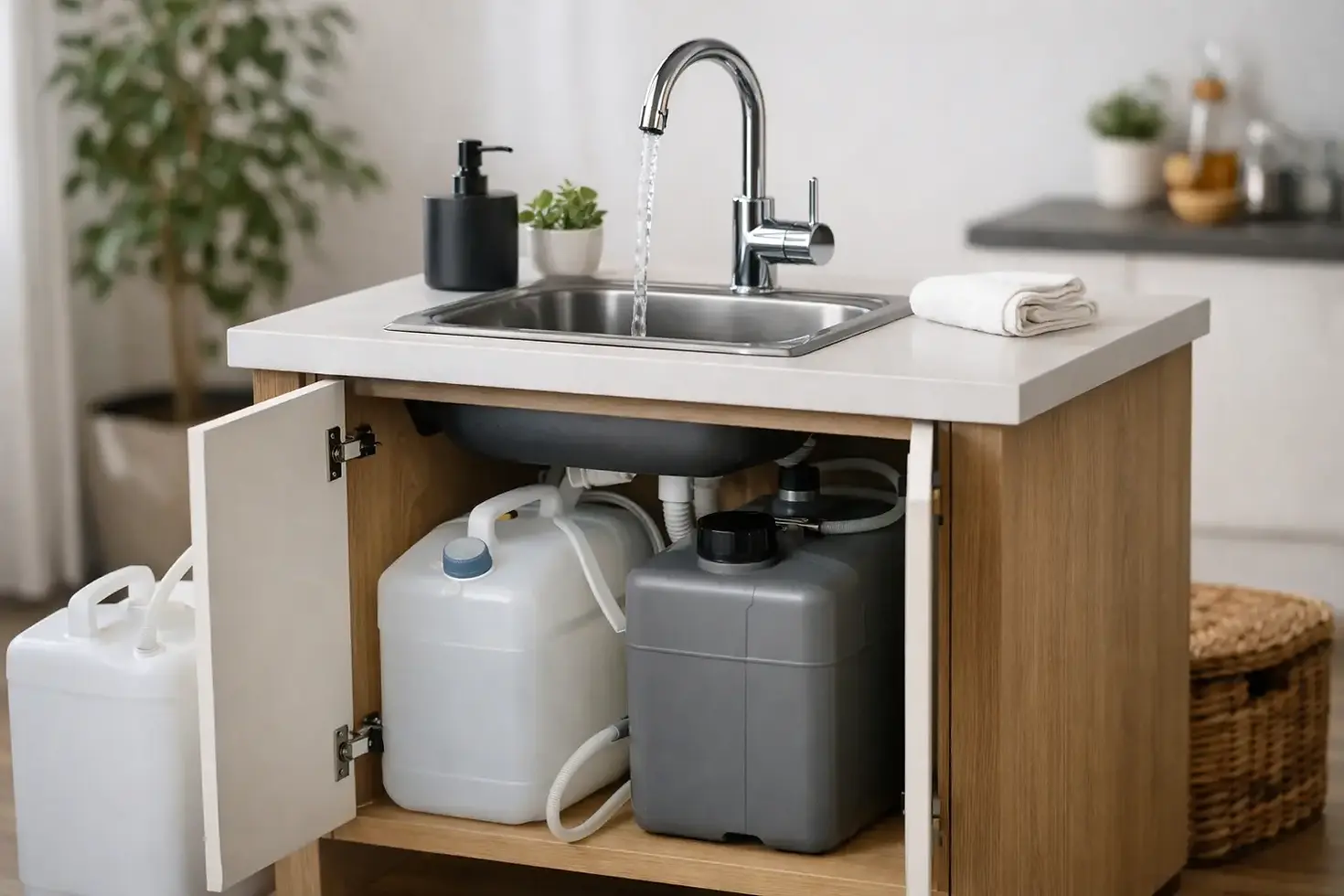
A no-plumbing sink unit is a freestanding hand wash basin designed to work without a mains water connection. Instead of relying on fixed plumbing, it stores clean water internally, dispenses it through the tap, and collects waste water in a separate container. Many units also heat the water, giving you hot and cold functionality from one compact system.
That is the part many buyers are surprised by. These units are not just camping sinks or basic temporary stations. A well-designed model is built for regular professional use, with a proper basin, a smart cabinet finish, reliable water flow and a look that fits into customer-facing environments.
For anyone fitting out a treatment room or workspace, that matters. Clients notice presentation. A practical sink is essential, but so is choosing something that looks like it belongs in a professional setting rather than a stopgap.
Why businesses choose no-plumbing sink units
The biggest reason is simple - cost. Installing a traditional sink in the wrong location can become expensive very quickly once you factor in labour, pipe runs, drainage work, flooring disruption and making good afterwards. In some cases, it also involves permissions from landlords or restrictions on what can be altered.
A no-plumbing sink unit avoids most of that. If you have power, you can usually get up and running far sooner and with far less disruption. That makes it an attractive option for small businesses trying to open on schedule, add extra treatment capacity, or keep setup costs under control.
Flexibility is the second major benefit. If you move premises, reconfigure a room, or expand into a new area, the sink can move with you. That is useful for rented spaces, seasonal spaces, pop-up environments and businesses that are growing in stages rather than committing to a full refurbishment from day one.
There is also the issue of speed. Traditional plumbing can drag a project out. A ready-to-use unit is designed for quick setup, which is often the difference between taking bookings next week and waiting another month.
A guide to no plumbing sink units for different spaces
Not every buyer needs the same thing, which is why the right unit depends heavily on where it will be used.
In beauty studios and aesthetic treatment rooms, appearance usually matters almost as much as function. A sink unit needs to support hygiene standards while still looking polished and modern. Compact dimensions are often a priority too, especially in smaller rented rooms where every bit of floor space counts.
Tattoo environments tend to focus on reliability, ease of cleaning and practical workflow. Here, a unit needs to feel solid and straightforward to maintain. Fast access to handwashing is non-negotiable, so placement and ease of refill become key considerations.
Garden rooms, summer houses and converted outbuildings often present a different challenge. These spaces may have electricity but no easy access to water or drainage. In that case, the appeal of a no-plumbing basin is obvious. It allows the space to function properly without turning a simple conversion into a full building project.
Semi-residential settings sit somewhere in the middle. If you are using a home-based treatment space or detached room for clients, you want something that feels professional, clean and intentional. A self-contained sink helps create that impression without major works.
How to choose the right no-plumbing sink unit
The first thing to consider is daily usage. A unit used occasionally in a garden office has very different demands from one used all day in a busy treatment room. Water capacity, waste capacity and refill frequency all matter more as usage increases.
The second factor is size. It is tempting to choose the smallest option available, but too compact can become inconvenient if the basin is awkward to use or the storage is limited. On the other hand, an oversized unit can dominate a small room. The best choice is usually the one that balances comfortable handwashing with sensible proportions for the space.
Water temperature is another important point. Some users only need basic handwashing capability, while others want hot and cold running water for a better client experience and a more premium setup. If your service environment is customer-facing, this can make a real difference.
Finish and styling should not be treated as an afterthought. In commercial spaces, your fittings contribute to the overall impression of the room. A sleek, modern sink unit can support the look of a premium service business, while a poorly finished product can make the room feel temporary.
You should also think about whether a standard unit will do the job or whether a bespoke option makes more sense. If your room has unusual dimensions, tight corners or a fixed layout to work around, custom sizing can save a lot of frustration.
What to check before you buy
Start with the practical basics. Measure the space carefully, including doorways, working clearances and where the unit will sit in relation to treatment beds, chairs or workstations. The sink may fit the room on paper but still feel awkward if it interrupts movement or daily workflow.
Next, think about access to power. A no-plumbing sink unit removes the need for mains water, but it still needs electricity to operate features such as heating and pumping. Make sure the planned position is realistic and safe rather than simply convenient in theory.
Then consider maintenance. Every self-contained unit needs fresh water topped up and waste water emptied. That is not a drawback so much as part of the system, but it is worth being honest about your usage levels and routine. For most small businesses, this is a manageable trade-off when compared with the cost and hassle of plumbing work.
Lead time matters too. If you are opening a new room or adding a sink to meet a business deadline, check whether you need an off-the-shelf model for speed or whether you have time to wait for a custom build.
The trade-offs to understand
No-plumbing sink units offer a practical solution, but they are not identical to fixed plumbing. If your space handles very high volumes of use all day, every day, the routine of refilling and emptying may become less convenient than a permanent plumbed installation.
That said, many buyers are not choosing between two equally easy options. They are choosing between a no-plumbing sink unit and no sink at all, or between a quick setup and a costly fit-out project. In those situations, the trade-off is usually worthwhile.
The question is not whether self-contained units replace every traditional sink. It is whether they solve the real problem in your space. For many salons, clinics and compact treatment rooms, they do exactly that.
Standard or bespoke?
A standard ready-to-use unit is often the best route if you want speed, predictable pricing and a straightforward setup. It keeps the decision simple and gets the room operational quickly.
Bespoke is usually the better choice when your space is awkward, your branding matters, or the unit needs to work around furniture, equipment or layout restrictions. A custom solution can feel far more integrated, especially in premium treatment environments where appearance is part of the service.
This is where working with a specialist supplier helps. A business such as Infinity Basins can offer both off-the-shelf convenience and custom support, which gives you more room to choose a solution that actually fits the space rather than forcing the space to fit the product.
Is a no-plumbing sink unit right for you?
If you need a professional handwashing solution in a space with no mains water connection, the answer is often yes. It is particularly well suited to businesses that value quick setup, lower installation costs, flexible room planning and a cleaner, more polished client environment.
It may be less suitable if you have heavy-volume usage and easy, affordable access to full plumbing already. But that is not the typical situation for many independent operators. More often, the challenge is creating a compliant, practical sink setup in a room that was never designed for one.
That is exactly where these units make sense. They remove a major barrier without turning a simple room upgrade into a building project.
A good sink unit should make your space easier to run, easier to present and easier to grow with. If it saves you weeks of delays and thousands in plumbing costs at the same time, that is more than a convenience - it is a smart business decision.


Comments