
How to Kit Out a Mobile Food Business for Hygiene

Last Updated: November 21, 2026
Quick Summary
Essential mobile food hygiene equipment is the minimum set of sinks, cleaning chemicals, hand-hygiene supplies, utensils, storage and waste kit needed to serve food safely from a vehicle or stall. It includes a handwash basin with hot water, a three-compartment sink, a probe thermometer, colour-coded cloths and brushes, and lidded waste bins.
Fund the essentials properly before adding optional convenience kit such as a second set of chopping boards.
A handwash basin must deliver hot water, soap in a dispenser and a hygienic drying method.
Make up fresh sanitiser at the start of each service and discard anything left at close-down.
Register with your local authority's environmental health team before you trade.
Keep temperature and cleaning records current, not just filled in on the day of inspection.
Need a sink with no plumbing?
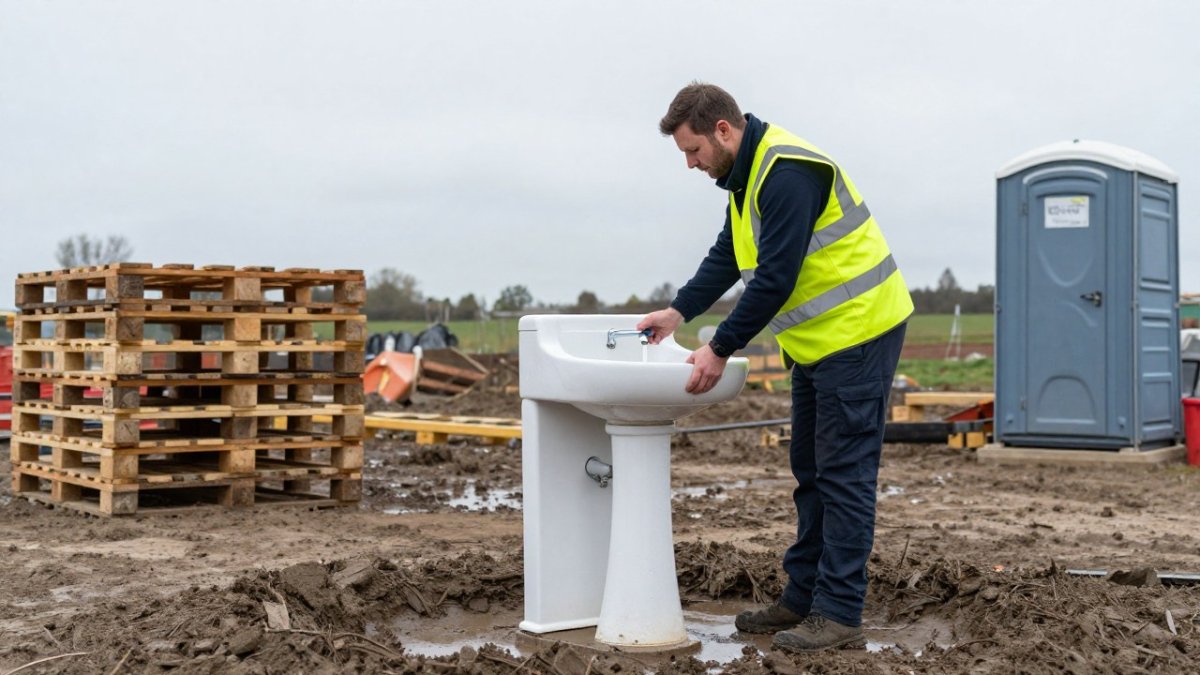
Self-contained hand wash basins with instant hot and cold water, no installation needed.
Table of Contents
What Essential Hygiene Equipment a Mobile Food Business Actually Needs
Essential mobile food hygiene equipment is the minimum set of sinks, cleaning chemicals, hand-hygiene supplies, utensils, storage and waste kit needed to serve food safely from a vehicle or stall.
The pressure is real. A review of food-safety challenges in catering businesses identified recurring failures in personal hygiene and waste management, both of which are easier to get wrong in a cramped mobile unit than in a fixed kitchen Food Safety in the Catering Sector review.
The core kit list at a glance
Here is the short version, grouped the way you will actually pack it:
Handwashing: a self-contained basin with hot and cold water, soap, paper towels
Dishwashing: a three-compartment sink or equivalent, food-safe detergent, sanitiser
Surfaces: colour-coded cloths, food-safe sanitiser spray, degreaser
Essential versus optional: where to draw the line
Essential means you cannot trade legally or safely without it. Optional means it makes life easier but nothing breaks without it.
Item | Tier | Why |
Handwash basin with hot water | Essential | Core legal and safety requirement |
Three-compartment sink | Essential | Manual dishwashing and equipment cleaning |
Probe thermometer | Essential | Cold chain and cooking checks |
Colour-coded cloths and brushes | Essential | Cross-contamination control |
Lidded waste bins | Essential | Pest and contamination control |
Second set of chopping boards | Optional | Useful on busy days, not a legal must |
Extra grey-water tank | Optional | Fewer disposal runs, no compliance gain |
Buying optional extras before essentials is a common mistake. Fund the essentials properly, then add convenience kit.
Mobile Food Business Handwashing Facilities: Getting the Basics Right
Mobile food business handwashing facilities must deliver hot water, soap and a hygienic drying method at every point where hands touch food. A basin that only runs cold, or one shared with dishwashing, fails on all three counts.

Hot water, soap and drying: the three-part test
Run this test on your own setup before an inspector does:
Hot water: does it reach a genuinely hot temperature on demand, not just warm after five minutes of running?
Soap: is it in a dispenser, not a bar sitting in a puddle?
Drying: are there paper towels or a working dryer, or is everyone wiping hands on an apron?
If any answer is no, that is your next purchase. You can see a fully self-contained sink with instant hot and cold water that runs from a standard electrical socket. Hand hygiene is a central part of food-safety practice, and a basin that makes proper handwashing easy is often a practical fix. Our guide on why mobile businesses need hygienic handwashing explains more.
Choosing a Portable Sink for a Food Truck or Street Food Stall
The right portable sink for a food truck heats its own water, holds its own fresh and waste water, and needs nothing more than a standard electrical socket. Anything requiring a plumber is not portable in any useful sense.
Three things decide the choice:
Water capacity: match tank size to a full service day, not a single quiet shift
Heat source: instant hot water beats a small tank that runs cold mid-service
Footprint: measure your galley before you buy, then measure again
For a full walkthrough, our portable hand sink guide covers tank sizes, tap types and siting.
Your Food Truck Cleaning Equipment Checklist
A food truck cleaning equipment checklist should cover chemicals, tools, surfaces and waste in one pass. Work through it at open and close every trading day, and keep a signed record so an inspector can see the routine in place.
Chemicals, sanitisers and safe storage
Food-safe sanitiser, correctly diluted and labelled with the make-up date
Detergent for washing up, kept separate from sanitiser
Degreaser for the extraction hood, grill surround and stainless steel that gathers fat
Watch out: mixing detergent and sanitiser in one bucket is a common chemical error. Detergent lifts grease, sanitiser kills bacteria, and combining them does neither job properly. Make up fresh sanitiser at the start of each service and discard anything left at close-down.
Tools, cloths and colour coding
Colour-coded cloths for food-contact surfaces, raw areas and general cleaning
Brushes with replaceable heads for grill bars, drains and crevices
A mop and bucket small enough to store upright without blocking the walkway
In a compact galley, storage is the constraint. Hang brushes and mops on hooks rather than leaving them on the floor, and keep clean cloths in a lidded tub separate from used ones. Carry at least twice the number of clean cloths you think you need.
Surfaces, utensils and food-contact equipment
Chopping boards in a full colour-coded set, stored upright and apart
Food-approved utensils that can be washed and sanitised between tasks
Probe thermometer with a wipe-clean stem, checked and calibrated regularly
Clean and sanitise food-contact surfaces between tasks, not just at the end of the day: a quick detergent wipe and sanitiser spray after raw preparation, before ready-to-eat work, and again at close-down. Keep a small spray bottle within reach so the step is easy to complete.
Waste and grey water
Lidded bins that close fully, lined with refuse sacks
A separate container for recyclable packaging if your pitch or council requires it
Grey-water tank sized for a full trading day, with a plan for approved disposal
Our guide to mobile business grey water disposal covers legal disposal points and tank management. Log when you empty the tank and where, as evidence of responsible disposal.
Replenishment and restocking
A checklist is only useful if the kit is actually on board. Keep a restocking list on the inside of a cupboard door and tick it at the end of each trading day: sanitiser, detergent, paper towels, gloves, refuse sacks, clean cloths. Replace low stock before the next service rather than discovering the gap at the pitch.
Street Food Hygiene Requirements and Local Authority Checks
Street food hygiene requirements in the UK centre on registration with your local authority, a documented food safety management system based on HACCP principles, and being able to show temperature and cleaning records on request. Registration must happen before you trade. The link between those requirements and the equipment you carry is worth understanding before an inspection.
What registration and inspection actually involve
You register with the environmental health team at your local authority before you trade, including if you trade from a vehicle or temporary pitch. Confirm the timing with your council. After registration, your business is risk-rated and inspected on a schedule that depends on the food you handle and your track record. Inspection frequency depends on the risk rating your local authority assigns.
Inspectors look for evidence, not assurances. Keep a simple folder, paper or digital, holding:
Your registration confirmation
Temperature records for fridges, freezers and cooked food
Cleaning schedules with sign-off
How your equipment choices support the inspection
Every item in your mobile food hygiene kit should map to a requirement an inspector will check, and you should be able to explain that mapping in one sentence.
Handwash basin with hot water, soap and drying: supports the personal hygiene and handwashing requirements inspectors check first, and is the most common point of failure in mobile units.
Three-compartment sink or equivalent: supports separation of washing, rinsing and sanitising, demonstrating that food-contact equipment is cleaned properly.
Probe thermometer and temperature records: supports the cold chain and cooking checks that form the backbone of most HACCP plans.
If you cannot point to the equipment that supports a requirement, that is the gap to close before your next inspection.
Preparing for a local authority check
Local authority checks vary in emphasis, so confirm specifics with your own council's environmental health team. The principle is consistent: if you cannot show it, it did not happen. A short preparation routine makes the difference:
Rehearse the walk-through. Ask someone to play inspector and follow the path from handwash basin to prep surface to waste bin, noting anything that requires an explanation.
Check the records are current. Temperature and cleaning logs should be filled in for the days leading up to the visit, not just the day itself.
Confirm chemical dilution and labelling. A measuring jug and a labelled bottle answer the sanitiser-strength question in seconds.
Know your disposal arrangements. Be ready to explain where grey water and waste go, and keep any receipts or logs that show it.
Watch out: treating the inspection as a paperwork exercise rather than an equipment and routine check is a common mistake. Records are most useful when the kit and the habits behind them are visibly in place.
Cross-Contamination Controls in a Compact Mobile Kitchen
Cross-contamination in a mobile kitchen is managed through separation, colour and sequence. You do not need a bigger unit, you need a stricter system.
Colour-coded equipment does most of the work. Assign one colour to raw meat, another to ready-to-eat food, another to cleaning.
The hand-contact route is also worth addressing. Door handles, tap levers, fridge seals and till screens are cross-contamination points that nobody colour-codes.
Budget Versus Professional Equipment Tiers Compared
Budget kit can get you trading, while professional kit is generally built for heavier use over a busy season.
Feature | Budget tier | Professional tier |
Sink construction | Thin plastic, glued joints | Thick moulded shell, sealed joints |
Water heating | Small tank, cools under load | Instant hot water on demand |
Tank capacity | Short service window | Full trading day |
Cleaning tools | Mixed colours, basic bristles | Full colour-coded set, replaceable heads |
Lifespan | A season or two | Several seasons |
Best for budget: occasional traders, markets and pop-ups testing an idea. Skip if: you trade more than two days a week, where the replacement cycle eats the saving.
Best for professional: daily traders, event caterers and anyone facing regular inspections. Skip if: you are genuinely testing the concept and may not continue.
Planning Your Plumbing-Free Handwash Station
A plumbing-free handwash station needs three things: a power supply, a self-contained basin and a plan for refilling and emptying. Everything else is detail.
Start by siting the basin within arm's reach of the food prep area but not directly over it. Our step-by-step guide on adding a sink without plumbing walks through the installation.
Infinity Basins offers self-contained basins for this kind of setup.
Kitting out a mobile food business for hygiene comes down to getting the essentials right first and building convenience on top.
Frequently Asked Questions
Do food trucks need a separate handwashing sink?
Yes. A dedicated handwash basin must be separate from any sink used for food preparation or dishwashing, so hands are never washed where utensils or ingredients go. It needs hot and cold running water, soap and a means of drying hands, such as paper towels. In a compact unit, a self-contained basin that runs from a power supply lets you meet that requirement without a mains water connection or a full plumbing install.
How do you provide hot water for handwashing in a mobile food unit?
Most operators use either a water heater fed from an onboard tank or a self-contained basin with built-in heating. Whichever route you take, check the water actually reaches a temperature that supports proper hand hygiene rather than merely feeling warm. Test it during a busy service, not just at start-up, and keep a simple record of checks so you can show an inspector the setup works consistently.
What cleaning equipment should a street food stall carry?
At minimum: colour-coded brushes, a mop and bucket, squeegees, food-safe sanitiser and detergent, cloths or a centrefeed wiping system, waste bins with lids and refuse sacks, a probe thermometer, and gloves and aprons. Store chemicals below and away from food, keep sanitiser at the correct dilution, and set up a cleaning routine between tasks and at close-down so nothing is left to chance.
How can a mobile food business prepare for a food hygiene inspection?
Register with your local authority before trading, keep a documented food safety management system based on HACCP principles, and maintain temperature and cleaning records. On the day, inspectors look for a working handwash basin with hot water, soap and drying, separated raw and ready-to-eat handling, covered waste, and evidence that cleaning actually happens. A written routine plus records turns a stressful visit into a straightforward one.


Comments